Getting my heart ready — Part 1
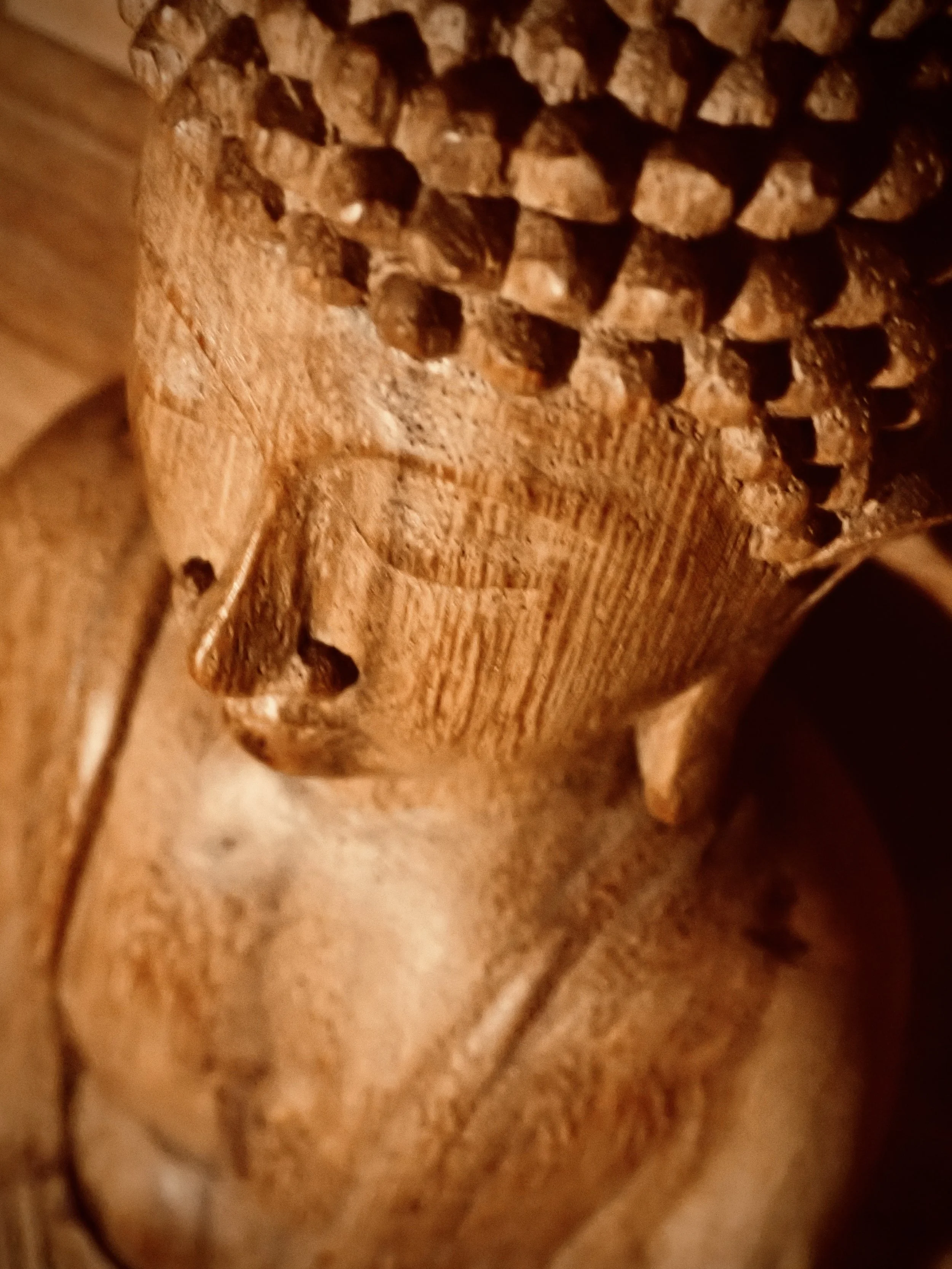
Confessions aren’t usually associated with Buddhism, but in this first entry of a two part post, I want to share some of the thoughts and experiences that led me onto this path — and what finally pushed me to walk the Shikoku Henro pilgrimage. So, let me begin with a confession:
I don’t consider myself a Buddhist.
At least, not in the traditional sense. In fact, I don’t see myself as religious or spiritual in the way most people define those words. I’ve always had difficulty with organized religion and with the dogma and doctrine that often accompany it.
The idea of a “spirit” — a continuous, identifiable form of “me” living somewhere inside my body that somehow continues after this physical vessel turns to ash — has always felt unrealistic.
With what we now understand about the mind, the brain, and the psyche through psychology, cognitive science, and neuroscience, it seems clear that many religious assumptions are simply not grounded in observable reality. To believe that the collection of memories, thoughts, and narratives that create the sense of a “self” could exist separately from the brain that produces them feels highly improbable.
This doesn’t mean I dismiss the value of religion or spirituality. I understand the positive effect belief systems can have on individuals and on society as a whole.
Most, if not all humans seem to need some kind of belief — a mental buffer to keep us from falling fully into nihilism. Throughout human history there has always been some form of worship or reverence for something beyond the material world. It appears almost instinctive. I’m sure there are studies confirming this — I just haven’t explored them yet.
So Why a Buddhist Pilgrimage?
With everything I just said, it’s reasonable to ask WHY I’ve chosen to walk a Buddhist pilgrimage.
Is there nothing spiritual about it for me?
There is — though not in a supernatural sense. For me it’s about the figurative spirit — the human spirit. The warmth, the fire, the will to continue. The heart.
Earlier this year, I went through a deeply personal trauma and reached a breaking point. The cause isn’t necessary to share here — those who know me already know. What’s important is that it brought grief I never expected to experience.
The nihilism I mentioned earlier tightened its grip, and because I had already convinced myself there was nothing beyond the material world to turn to, I had no buffer. No net. Nothing to soften the fall.
Eventually, everything collapsed into a mental breakdown, and I reached out to a psychologist for help.
After several sessions, he helped me regain enough clarity and confidence to function again. One piece of advice stayed with me:
Choose a long-term goal. Put a dot on the horizon.
At first, that dot was simply “a long-distance hike” — something I had wanted to do for years. Over time, that idea evolved into the Shikoku Henro. Combining my love for Japan with a long distance hike, visiting temples, while having time to contemplate my current state of being, sounded like a great goal.
It sounds like simple — almost obvious — advise, but setting that single goal helped pull me out of the hole I had dug for myself.
A Shift I Didn’t Expect
Researching the pilgrimage led me deeper into Buddhism. I already knew a little, but I was surprised to find how closely many of its ideas aligned with my own lived experience — and, ironically, my non-belief. The thing that sets it apart from other religions is the fact that it’s non-theistic and can also be seen as a philosophy. I especially like the fact that it is open to change and can adapt to both place and time. As it has done moving from India to the rest of Southeast Asia and the world in the past 2,5 millennia.
I have mostly gravitated towards Zen Buddhism of the Mahayana branch due to it’s heavy emphasis on understanding through practice instead of the study of doctrine.
There’s more to say about that — but it belongs in part two.
To be continued.