Closure and Release
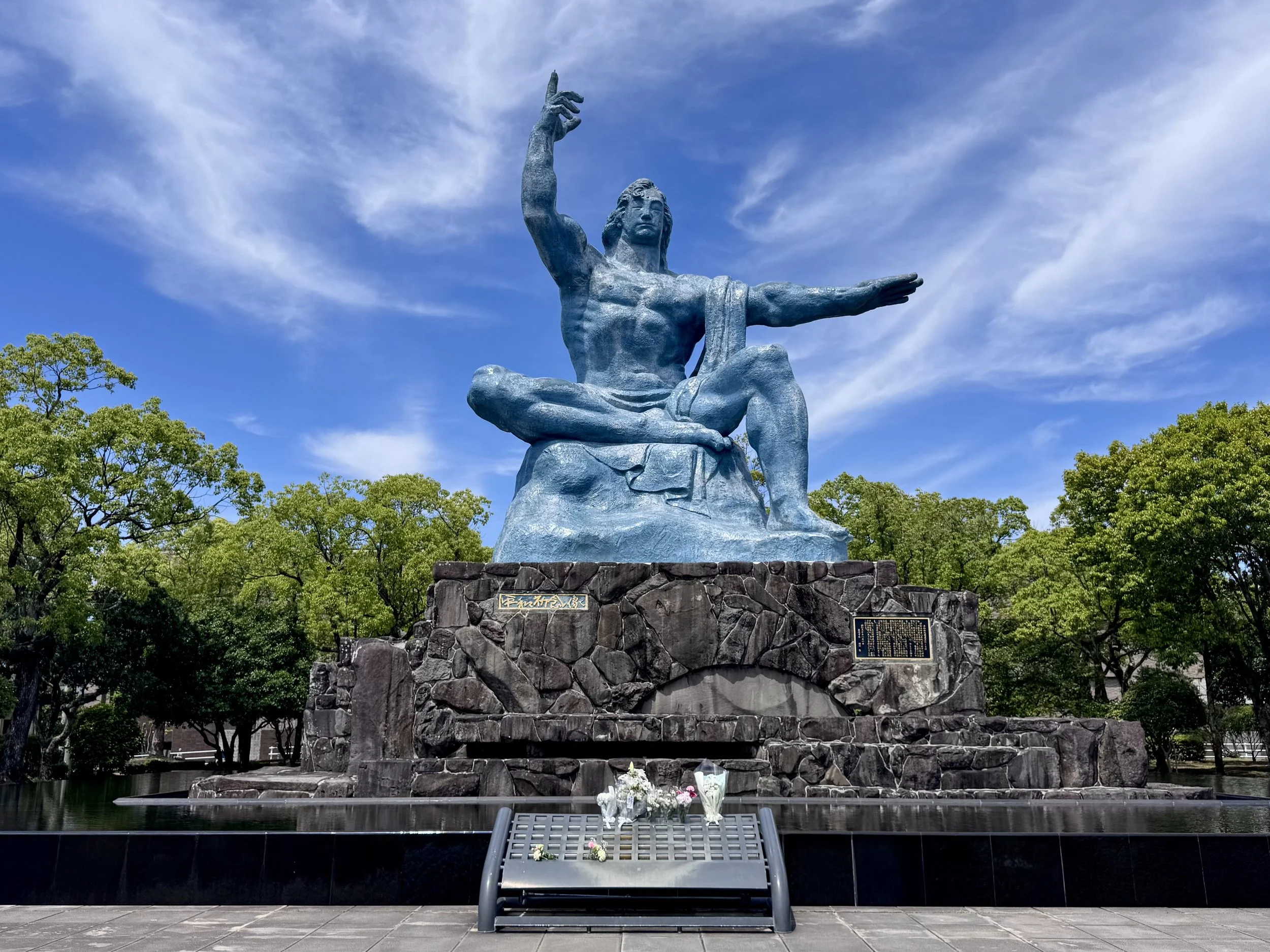
Okay, so this is going to be a deep, personal—and rather long—post… Although I described my final moments on the Shikoku pilgrimage in my previous post, I also mentioned that I still had more temples to visit as a henro.
To be more accurate, I should actually have said more sacred and special places. You see, this pilgrimage became something that was more than just a hike to get my mind in order and contemplate my life. It also became about letting go of certain patterns I clung to—patterns I felt were deeply ingrained, and perhaps even ancestral. But more on that specific topic later.
The first thing I did, after taking some time to recuperate, rest, and say goodbye to Shikoku, was head to Koyasan, the home of Shingon Buddhism and the resting place of Kōbō Daishi. Koyasan is located in a mountainous area of Wakayama Prefecture and is considered one of Japan’s most important spiritual centers. It houses an enormous number of temples (117) and also contains the ancient cemetery of Okuno-in, where the mausoleum of Kōbō Daishi can be found, and where he is said to remain in eternal meditation. As countless pilgrims have done before me, I went to Koyasan to report the completion of my pilgrimage to Kōbō Daishi and to thank him for his guidance and protection. It felt like closure—and a true blessing—to be able to complete my pilgrimage in this way.
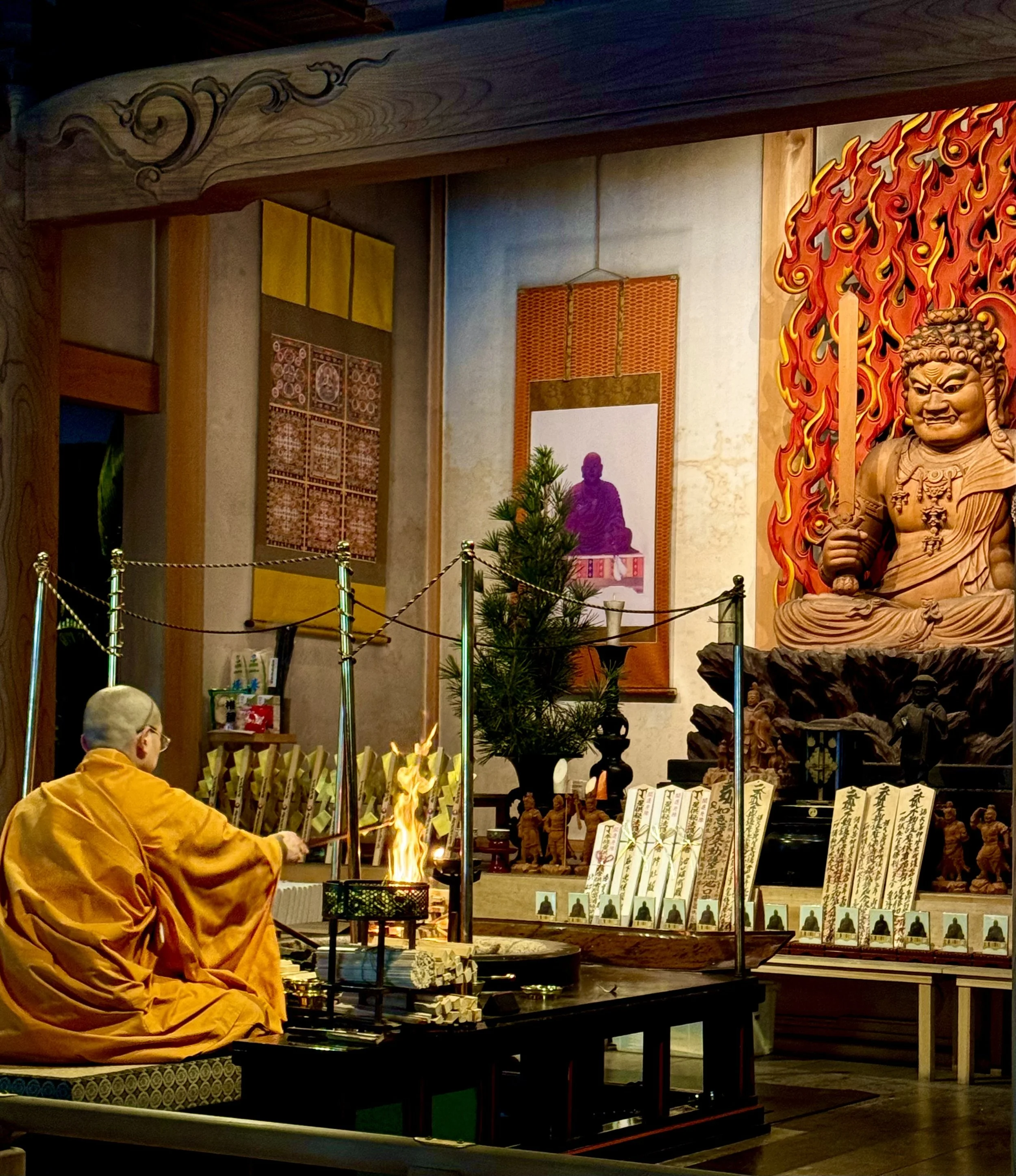
Before visiting Kōbō Daishi, I attended a Goma fire ritual, a 1,200-year-old Shingon Buddhist ceremony in which monks burn wooden sticks to symbolize the burning away of human suffering and worldly desires. It felt fitting to first cleanse myself of any lingering doubts and fears of what might come next in life and burn away past regrets and grievances.
Something I haven’t yet written about, but which is deeply connected to my personal pilgrimage—and perhaps more intimate—has to do with generational and inherited trauma. I doubted whether I would write about this, but because it may serve others in similar situations, I decided to go ahead.
Before I started my pilgrimage, I had already decided that I would go to Nagasaki to visit the Prisoner of War Memorial Park dedicated to the prisoners of the Fukuoka 2B camp.
You see, my grandfather was a prisoner in this camp for most of World War II (October ’42 – June ’45). He was only sixteen when he was captured and must have suffered terribly during those dreadful years. Throughout his life, he never spoke about that period. Only recently did our family learn the full history through accounts from fellow POWs and the release of prisoner records. Had he not been transferred to another camp on Kyushu before the atomic bomb was detonated over Nagasaki, you might not be reading this blog post.
During my pilgrimage, I began contemplating what it must have been like to be in his circumstances at such a young age, and how those experiences may have shaped the rest of his life. I thought about how he might have viewed my journey through a country he likely considered enemy territory. I also wondered whether the trauma he endured might have trickled down through the bloodline, as my family has experienced a great deal of—let me try to put this sensitively—“relational drama” and difficulty connecting with one another.
I myself have often been closed off and struggled to let people come close, both emotionally and physically. I do not say this to place responsibility on anyone, but I have often wondered whether this is learned behavior, something passed on through family systems, or perhaps even through epigenetic inheritance. Science increasingly suggests that trauma of the kind he endured can, in fact, leave effects that carry across generations.
I felt it becoming part of my pilgrimage to try to understand—and perhaps help resolve—some of that inherited pain. During the recitation of the Heart Sutra, I would hold him in my mind. I would think about the way he used to make all his grandchildren kiss him on the forehead, then nose, then cheeks, then ears, then eyes, and finally the mouth—and in doing so, I would feel something soften inside me.
I prayed that he might be free of any bitterness or anger toward this country and its people—a country and a people that his grandson has now come to love deeply.
In the past, I have often spoken—or heard—the words “rest in peace” without fully grasping their importance. As I have written in other posts, I have never been a religious person, but I know my grandfather was. And by paying him this final homage, I feel I may have invoked some form of generational release.
Perhaps there is a sentence even more important than “rest in peace”:
Live in peace.
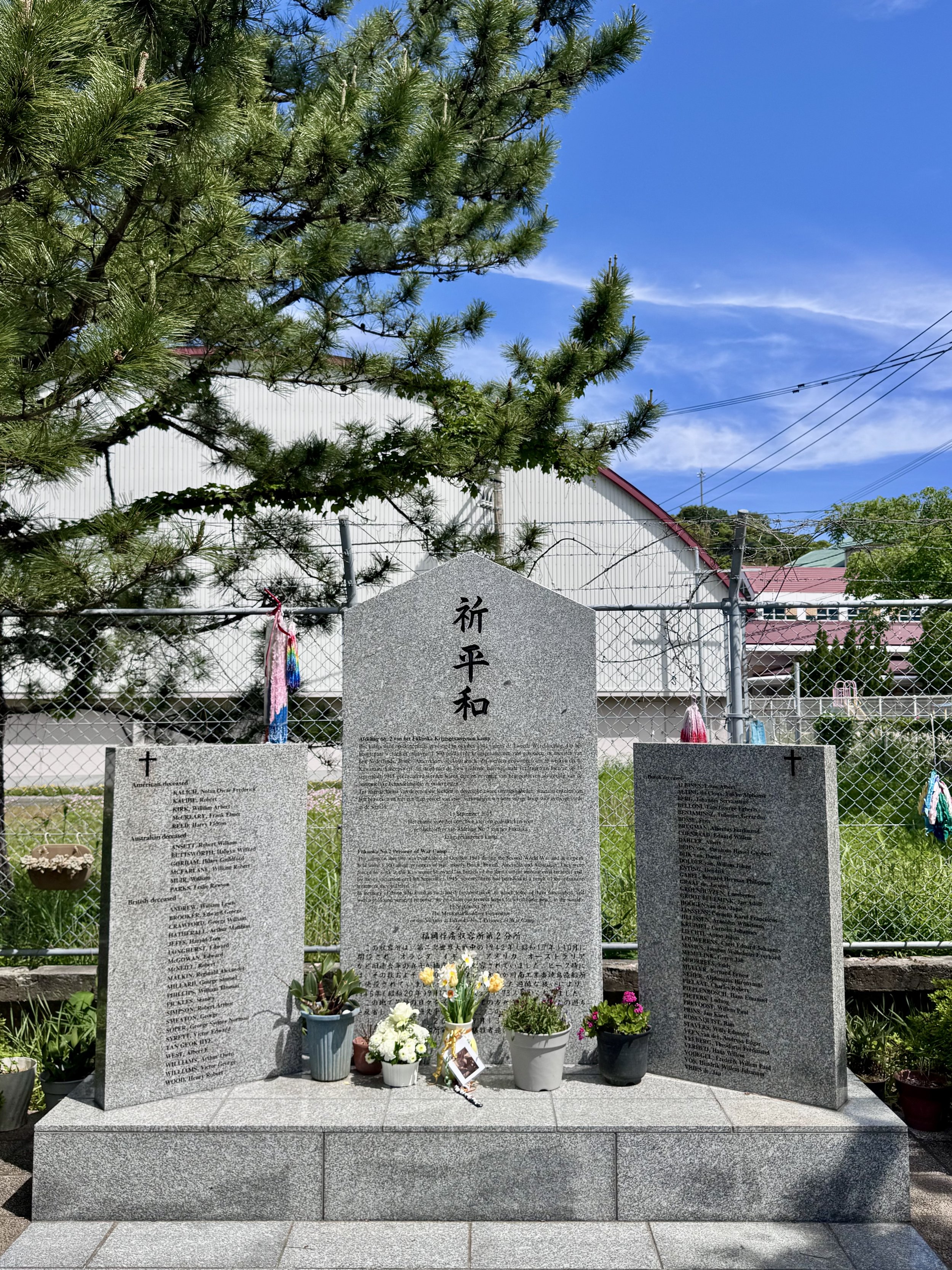
Prisoner of War Memorial - Fukuoka 2B POW Camp