Nihongo ga sukoshi dekimasu
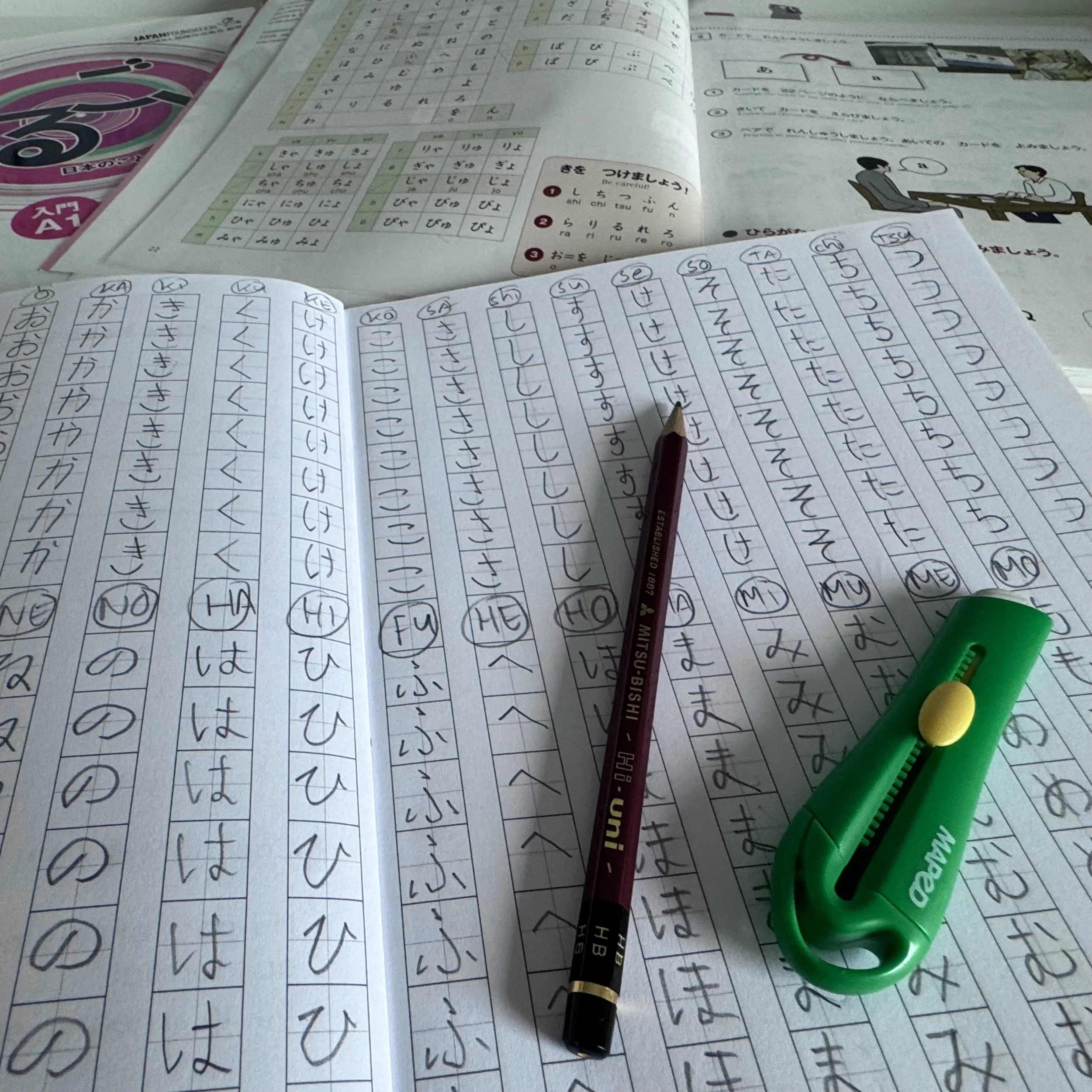
When it comes to preparation, I’ve so far written about my mental, physical, and practical preparation. For the practical part, however, there is more to add. Besides planning and gathering the necessary gear, I thought it would also make sense to be able to communicate in Japanese, even if just a little.
This will be the third time I visit Japan, and during my previous visits the people have always been very friendly and helpful. To be honest, getting by with English and a few essential Japanese words has never been a big problem. A little help from Google Translate goes a long way. I did, however, notice that it was really appreciated when you made an effort to communicate in their native language. On top of that, many Japanese people tend to be quite shy about their English, which makes it harder to truly connect because of the language barrier.
For this trip, I really wanted to be able to speak and understand at least a little Japanese—even if it’s just enough to introduce myself, order food, ask for directions, and make a room reservation. From what I’ve gathered from other henro, the locals on Shikoku are generally not very fluent in English, and most fellow pilgrims are Japanese. I’ll also be staying in henro houses and pilgrim lodgings, which are run by locals who often don’t speak much English. Having some basic knowledge of the language will probably come in handy.
So, since last October, I’ve been diligently following a “Japanese for Beginners” course at NiCHiRAN. Every Thursday we have a 1.5-hour class, and during the week I do my homework and review newly learned words and phrases. It has been great fun to dive into a new language—something I haven’t done in over 25 years—and to learn the syntax, grammar, and characters. Oh, the characters… I’ve learned all of the hiragana and a bit of katakana, and I can already tell that kanji are going to be the real challenge. I actually expected to hate learning the characters, but it turns out they’re the part I enjoy the most. Learning to read is surprisingly satisfying, and even though I’m very slow, every word feels like solving a small puzzle.
One of the perks that comes with this linguistic undertaking is that I can watch an unhealthy amount of anime. This has been a favorite pastime of mine for over thirty years, and I’ve always preferred subs over dubs. I’m noticing that I’m starting to pick up words and sentences where, previously, it all sounded cool but I had no idea what was being said. Good listening practice, I’d say—though I do hope I don’t end up sounding like an exaggerated anime character…
So, do I feel confident enough to have a conversation in Japanese now? Absolutely not 😅 But I’ll try nonetheless. What I set out to achieve has at least been partially accomplished. So let’s see how this goes.
Kōun o inotte kudasai / wish me luck