Hosshin: Awakening
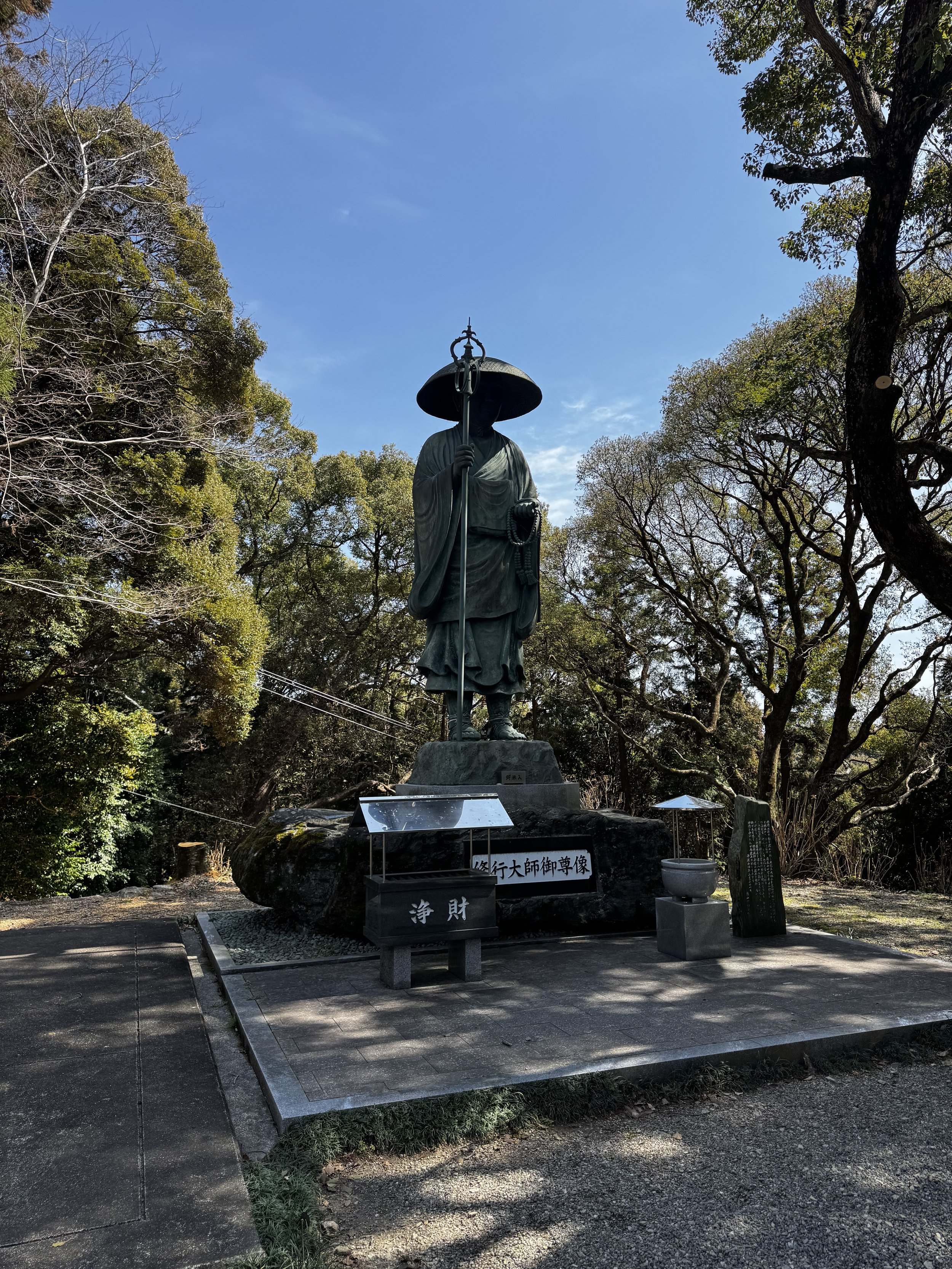
The Shikoku pilgrimage is structured in four stages, which correspond with the four prefectures of the island. On Thursday, the 12th of March, I finished the first stage, Hosshin—which translates to awakening—by reaching Yakuōji Temple (No. 23).
After leaving the city of Tokushima—where I ended my last blog entry—the landscape changed back to mountainous rural areas. Both Temple 18 and 19 were visited on the 9th of March and posed no big challenges, except for a bit of climbing. I spent the night at a lovely Henro House called Fun Farm, run by an elderly couple. Choco—the lady of the house—was very kind and welcoming. I was treated to some homemade curry and a lovely breakfast, which I shared with a Japanese couple from Chiba Prefecture who were also walking part of the Henro pilgrimage.
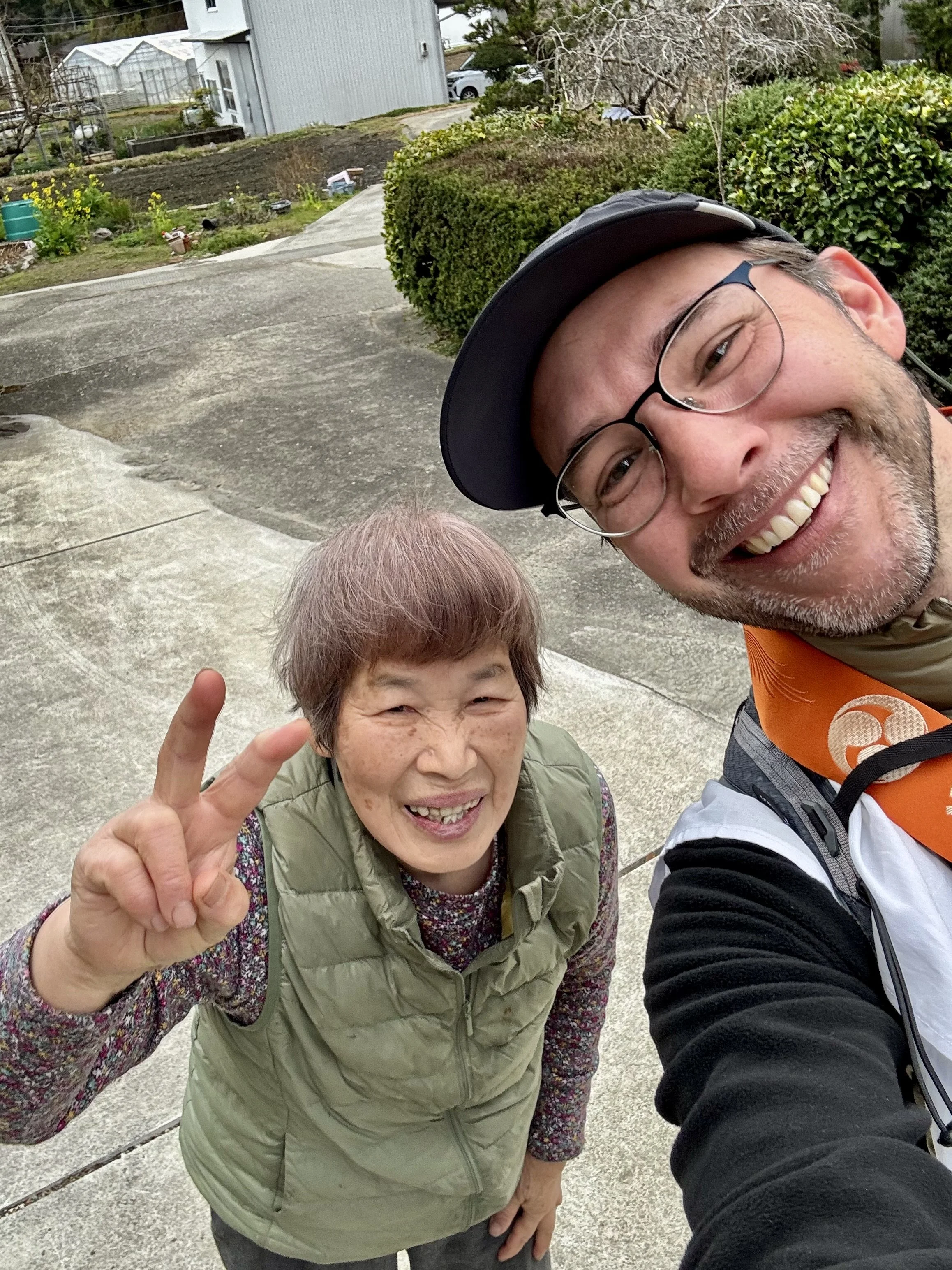
Choco from Fun Farm and myself
The next day I set out for Temple 20 and 21, both of which are situated on top of mountains. This was the second Henro korogashi, and this time the challenge was indeed not exaggerated. The climb up to Temple 20 was steep but doable. The way down, however, was quite treacherous, and the tree roots and loose stones caused me to twist my ankle halfway down. This was a bit of a setback for the rest of the day and made the climb up to Temple 21 even tougher than it would already have been without a limp. I finally managed to reach Tairyuji Temple, albeit a bit worse for wear. The views, however, were breathtaking, and luckily I could take the ropeway down instead of putting my now swollen ankle through another grueling downhill climb. At the ryokan next to the ropeway station, I was able to enjoy a nice soak in their onsen and put my swollen ankle on ice.
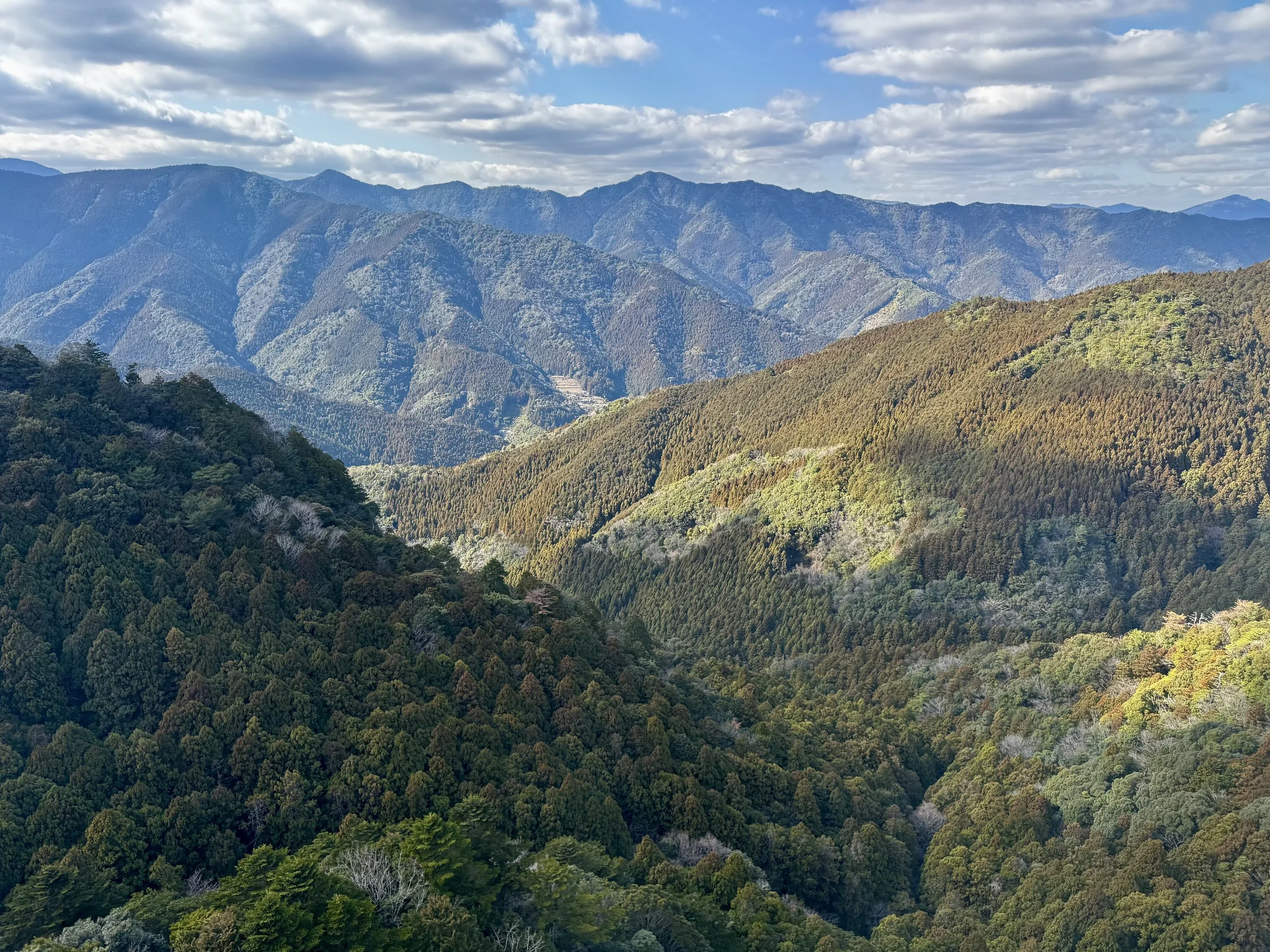
The view from Tairyuji Temple
The following morning the swelling was mostly gone, and I was able to walk again after taping my ankle. I decided to move forward but keep the distance limited to 12 kilometers. This way I would be able to visit Temple 22 and reach my homestay, which was located a short distance away. At a nearby konbini I met a couple of French pilgrims whom I had seen earlier along the way. It turned out they were staying at the same place. We shared a meal and our stories, and the next morning we said our goodbyes again.
Leaving Aratano, I headed out toward the coast after making a short stop at Fukui Dam. After about 10 kilometers I caught my first glimpse of the Pacific Ocean. Quite quickly the scenery changed from agricultural fields to coastline, with beautiful beaches and charming fishing villages. There were still some challenging mountain paths, but thankfully nothing too dangerous. At around three in the afternoon I reached Hiwasa, known for its sea turtles and for the 23rd temple: Yakuōji. The end of the first stage had been accomplished after some 150 kilometers.
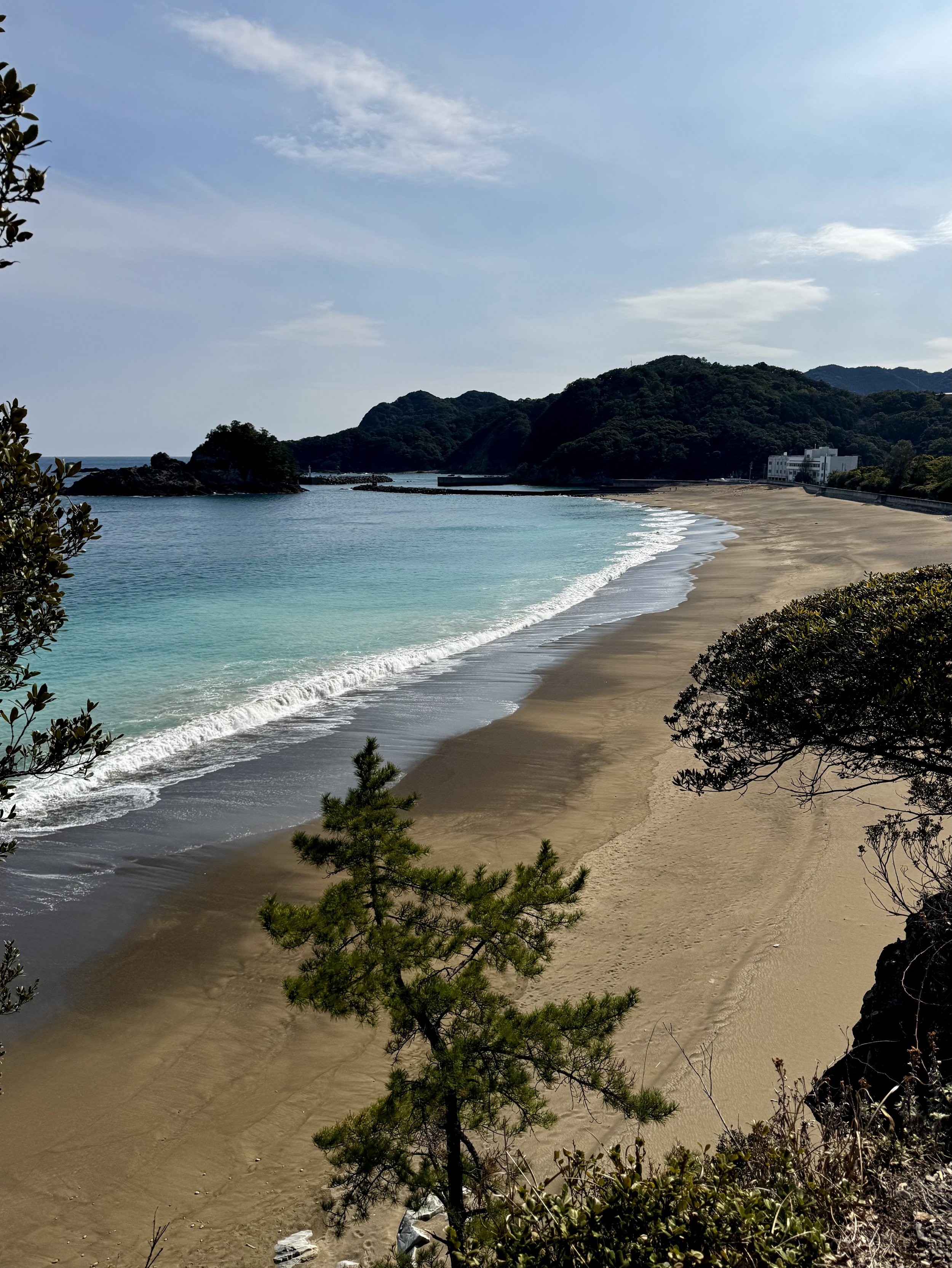
Ohama Beach near Hiwasa
So what did I awaken to during this first week and a half? At the very least, I can say that I definitely want to continue. I have also become aware of the limitations of my body, and that a plan is just a plan—when necessary, adjusting it to keep things manageable is essential. That is why, for the next stage called Shugyō—which translates to training—I will keep the distances limited to what my body can actually handle and plan breaks accordingly. If necessary, it will simply take more time to finish the pilgrimage, and that is fine. Enjoying the journey is more important than simply powering through it.